IRAN WAR: WHO GAINS?
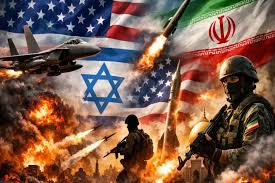
The number one beneficiary of the ongoing war is Russia. Sanctions on her oil are being relaxed, and the crude she previously sold to India on the black market at $30 per barrel is now close to $100 per barrel. This translates to massive cash inflow for Russia. Attention has also been diverted from her atrocities in Ukraine. Ukrainians are still dying, but global discourse has shifted toward Iran. It is a strategic distraction that favors Putin.
The second beneficiary is China, arguably the most focused country in the world. She is carefully monitoring the situation and weighing her options regarding a potential Taiwan takeover. China does not waste words, no frivolities, no distractions. She is patiently waiting for a historic leadership opportunity to present itself, possibly without force.
Who says suffering is a bad teacher? It was “Mr. A. Suffering” (A stands for Acute) that taught China discipline and focus. Nations like Portugal, Russia, France, Britain, Spain, and Japan once humiliated China. Today, China is patiently waiting for a moment of strategic advantage. However, the biggest loser in this war is not America, contrary to popular social media narratives. Iran is severely impacted. It will take years to rebuild, making her the number one loser.
America, on the other hand, is positioned to use Arab funds to rebuild military infrastructure in the Middle East while selling advanced weapons and generating new revenue. Before the war, Iran’s economy was already fragile; now, it is in critical condition.
With key layers of Iran’s leadership weakened and infrastructure damaged, America and Israel may have succeeded in making the cost of a nuclear Iran excessively high. This could stall Iran’s nuclear ambitions for now.
The second category of losers includes Gulf countries such as the UAE, Qatar, and Oman. Their economies, driven by tourism, hospitality, petrochemicals, and finance depend heavily on stability and security, both of which have been disrupted.
Europe is also reacting strategically. There is a renewed urgency to achieve energy sovereignty. This could reduce dependence on the Middle East and accelerate investments in nuclear and green energy, independent of China, America, and Russia. The geopolitical landscape is shifting rapidly.
America’s long-term interest in Iran revolves around oil dominance. With influence over oil resources in Venezuela, Iraq, Libya, and Syria, adding Iran would significantly increase control of global oil supply, potentially enough to weaken OPEC and Russia. Energy supremacy is central to maintaining the strength of the dollar and sustaining American global dominance.
However, Iran’s oil may not be easily accessible to America without regime change, which is unlikely without direct military intervention.
The presence of over 5,000 marines in the Mediterranean suggests that strategic options remain open. Iran’s strength lies in what can be described as a “blockchain command and control leadership structure” a distributed system that enhances resilience. This will likely become a subject of historical and strategic analysis in years to come.
That being said, Iran’s ambition to build a nuclear umbrella appears unrealistic for now. It remains a red line for America, Israel, and even several Arab nations. Saudi Arabia has clearly stated that it would pursue nuclear capability if Iran succeeds. A nuclearized Middle East is a dangerous prospect.
Israel, benefiting from a first-mover advantage, appears determined to prevent that outcome. Its primary objective—crippling Iran’s nuclear infrastructure, may already be partially achieved. However, Israel also bears significant economic costs, with disruptions affecting stability and productivity. Ultimately, it is in Israel’s interest to seek a quicker resolution and move toward peaceful coexistence with its Arab and Persian neighbors, possibly leveraging frameworks like the Abraham Accord.
Too much focus has been placed on Trump, which may be a misreading of the situation. Trump thrives on attention and controversy. Being at the center of global discourse serves both his political and business interests, particularly his media platform.
Even if the war ends today, its ripple effects will shape global dynamics throughout 2026. The more important question is how Africa positions itself to thrive in the aftermath of these shifts, rather than being consumed by the noise.
Back to Articles


Comments.
No comments yet — be the first to share your thoughts.
Leave a comment.